
The accessibility standards of the ADA make buildings safer and more accessible for all occupants. Failure to comply can lead to lawsuits and fines. The requirements are extensive, and you may want to consult an accessibility expert when building or moving into a new building. Door hardware is one area where we can help.
Let’s Talk Door Closers
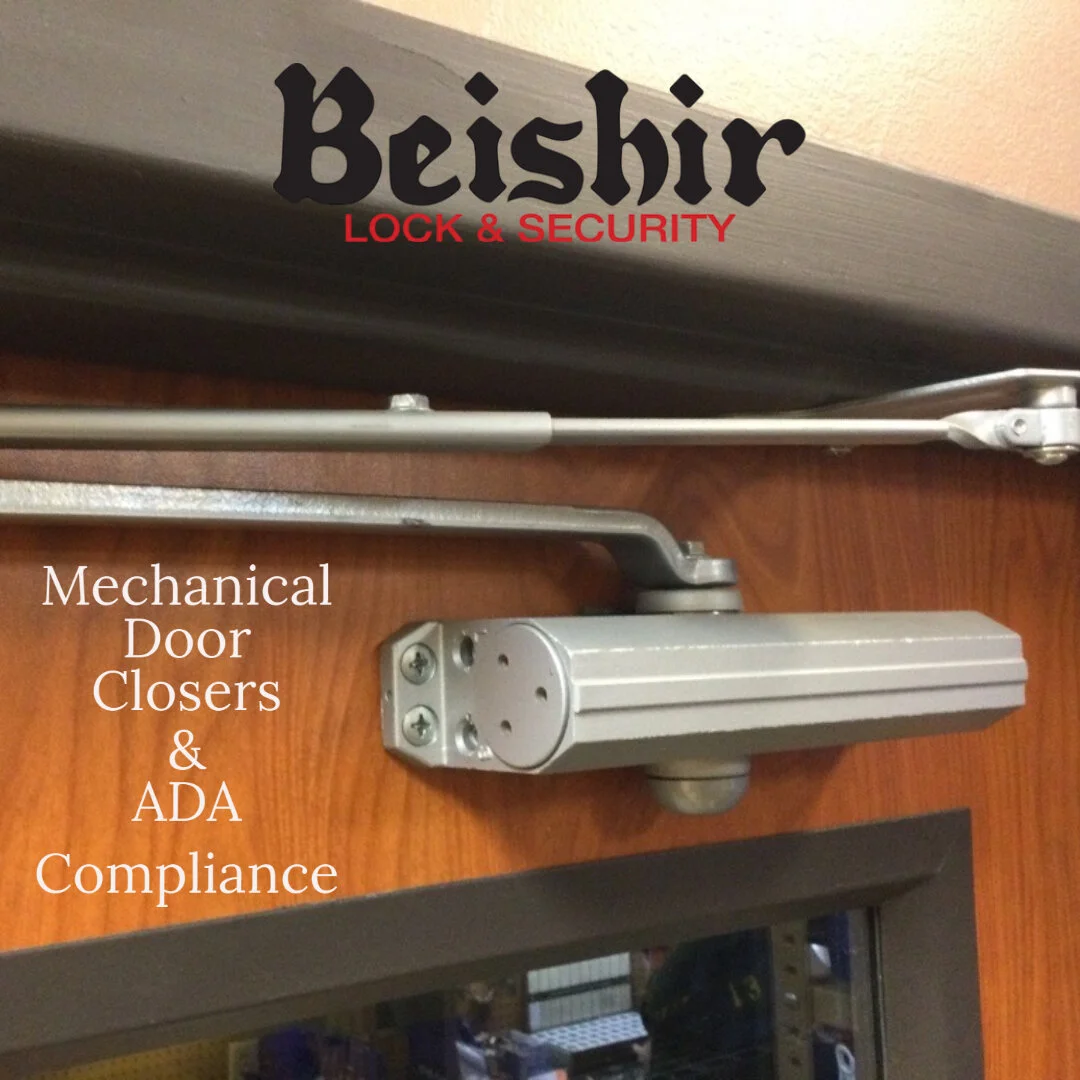
A door closer is a mechanical device that closes a door after someone opens it. Door closers are required on fire-rated doors, which need to remain closed to help prevent the spread of fire and smoke. Closers have internal springs and hydraulic oil with valves that adjust the speed of the door closing and latching. Practically every door in modern commercial, industrial, and institutional buildings is closed by a mechanical door closer. For ADA compliance, a closer has to be adjusted so that from an open position of 90 degrees, it takes at least 5 seconds for the door to reach 12 degrees from the latch. In plain terms, the door cannot close too quickly.
Accessible Doors
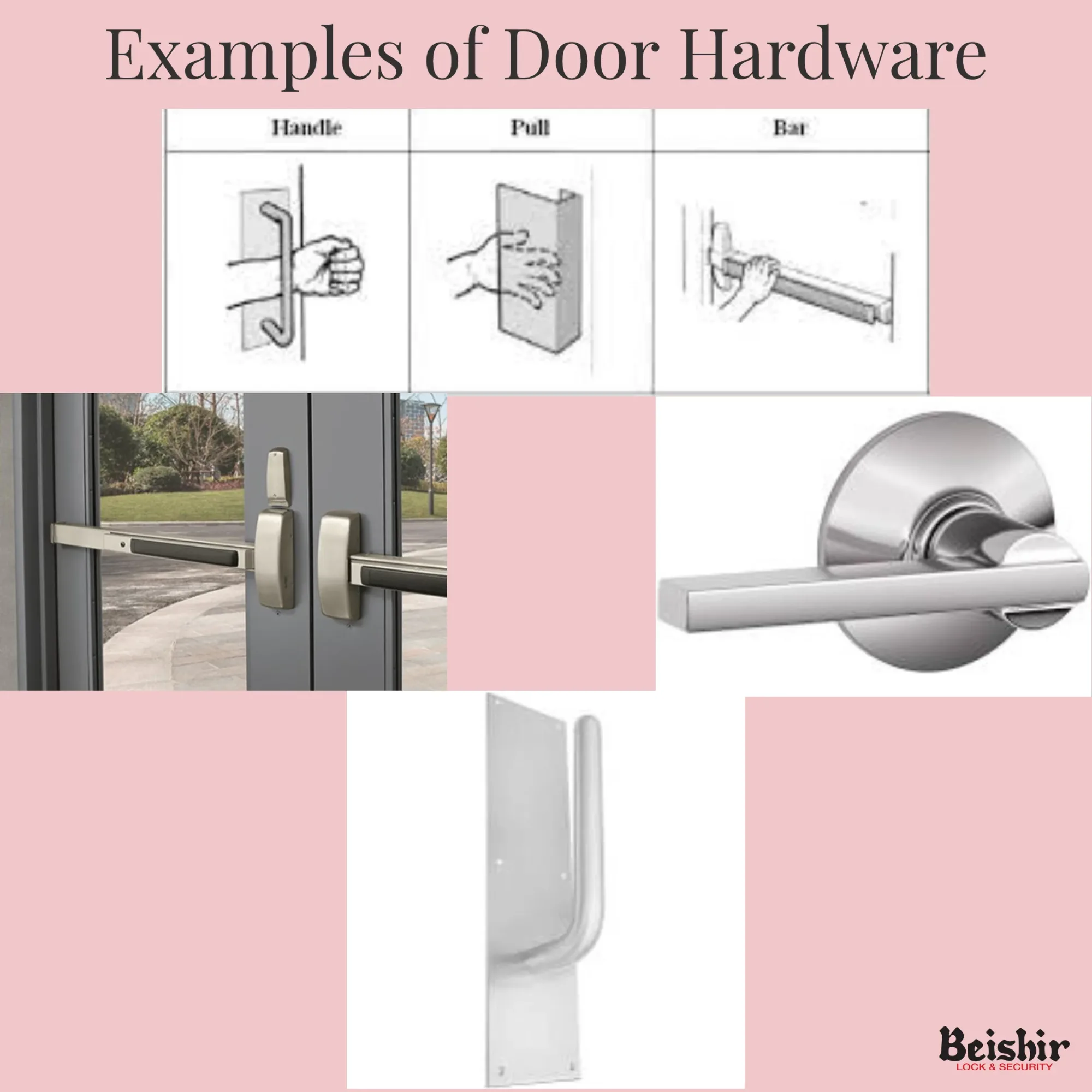
Under the ADA, lock hardware on an accessible route door must be operable with a maximum of five pounds of force, and it must not require tight grasping, pinching, or twisting of the wrist. There are a number of specifications and exceptions for accessible route doors, just like with egress exit devices. To make sure your hardware is up to code and avoid liability, it is wise to consult an experienced door hardware professional.
Automatic Door Openers
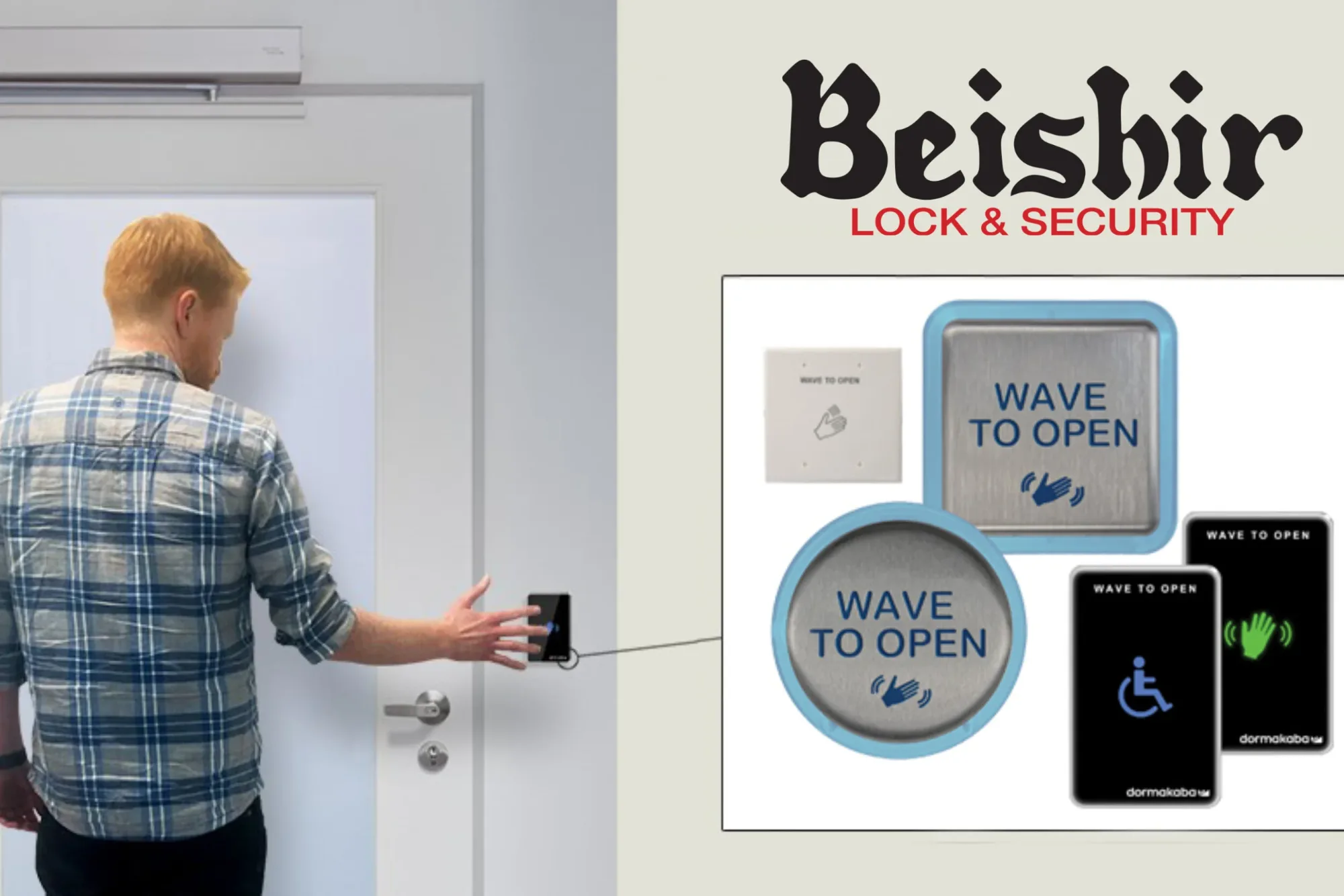
The ADA doesn’t require an automatic operator for a door to be considered accessible, but automatic doors are a great way to ensure accessibility for a wide range of people. Wave-to-open operators offer effortless, hands-free operation.
Contact us to find out how we can help your business meet ADA requirements with the right closers, levers, and exit devices.